
How We Raise Our Bengal Kittens
At Wild Grace Bengals, our kittens grow up in our family home in North Melbourne, with everyday household life, gentle handling, play and enrichment. We prepare each kitten for a new home through familiar routines, veterinary care and a considered match with their family.
Follow the journey from early development to homecoming, and see what we introduce, what records you receive and how we help you continue at home.
Home raised · Parent health screening · Veterinary clearance before handover
Our Approach to Raising Healthy, Confident Kittens
The early weeks give a kitten a beginning to build on. Our priorities are health, positive contact with people and preparation for the ordinary routines of a family home.
What Socialisation and Habituation Mean in Practice
Socialisation helps kittens become familiar with people and appropriate animal company. Habituation means learning that ordinary surroundings and experiences are not a threat. The Australian Veterinary Association recommends that this work begins with the breeder and continues with the new owner.
At Wild Grace, kittens experience household routines, human contact, gentle handling and play. These everyday foundations are more useful to a future owner than a promise that a kitten will instantly feel comfortable in every situation.
Every Kitten Is an Individual
Our breeding priorities include health, genetic wellbeing and a friendly, socialised temperament. By getting to know each kitten, we can work with families to consider individual temperament, preferences and suitability together.
Early experience is only part of a cat’s development. Individual temperament, health and the new home also matter. We can explain a kitten’s background and what they have practised; we cannot guarantee an identical adult personality or a stress-free response to every change.
From Birth to Homecoming: Our Kitten-Raising Timeline
Our kittens usually leave at around 12 weeks, after veterinary clearance. The stages below explain development alongside our confirmed home-raising and handover practices. Ages are approximate, not a fixed timetable of procedures.
Birth to Around Two Weeks: Security, Mothering and Monitoring
In general kitten development, the newborn period centres on dependence on the mother, warmth, feeding and rest. Our kittens are raised in our family home, and we can discuss each litter’s progress, monitoring and care with prospective families.
For your family: Ask about the kitten’s current progress and any veterinary concerns alongside the photographs and updates you receive.
Around Two to Four Weeks: Gentle Handling and Early Exploration
Early social learning begins while kittens are still very young. Gentle human handling is part of our confirmed rearing approach. The exact timing and length of an interaction should suit the kitten, rather than a target that every kitten must meet on the same day.
For your family: A kitten’s experience with people starts before you meet them. Continue with quiet, patient contact as they get to know you.
Around Four to Eight Weeks: Socialisation, Habituation and Play
As kittens become more active, play and exploration provide opportunities to learn. Our kittens encounter children, other adults and resident cats, alongside normal household life. We introduce litter trays, scratching surfaces, handling and carriers during their time with us; these are experiences to build on, not a list of skills we promise are mastered by eight weeks.
For your family: Ask which experiences your particular kitten has had. Familiarity with our home does not mean immediate confidence with every visitor, pet or sound in yours.
Around Eight Weeks to Homecoming: Confidence and Preparation
The weeks before collection include continued home life and preparation for the move. Before handover, our kittens receive a veterinary examination, first and second vaccinations, worming, flea treatment and microchipping. Pet kittens are desexed. We discuss your kitten’s personality, current care and expected collection or delivery date with you.
For your family: Review the care already provided and what will next be due. Collection is arranged around the individual kitten’s clearance, not a calendar promise.
Developmental background: AVA socialisation guidance and AAHA/AAFP kitten behaviour and environmental needs. These references explain general principles; they do not certify our individual kittens or practices.
How We Decide a Kitten Is Ready for Its New Home
Around 12 weeks is our usual leaving age. A veterinary examination and clearance are required before any kitten leaves. If clearance is delayed, we arrange the necessary care and postpone collection or delivery.
- We discuss your kitten’s health and preparation before agreeing handover.
- You receive the current feeding information and relevant care records.
- A written purchase agreement is signed before collection or delivery.
- We explain the experiences your kitten has had and the support available after arrival.
Litter habits may still be developing. A new home should allow time for routines and confidence to settle.
Health Screening and Veterinary Care
Parent screening and kitten veterinary care answer different questions. We explain both, including the limits of the evidence and the records available to your family.
PRA-b and PK Deficiency DNA Testing
Our breeding cats receive DNA testing for PRA-b and PKDef. PRA-b is an inherited retinal disease associated with progressive vision loss. PK deficiency is an inherited condition affecting red blood cells. Both have recessive inheritance: a carrier result is different from an affected result.
Breeding decisions consider individual genetic results, veterinary advice and overall health. We do not claim that every breeding cat tests clear. Buyers receive a summary of the parents’ health testing; this is not necessarily a set of original laboratory reports.
HCM Cardiac Screening
Our adult breeding cats receive heart screening for hypertrophic cardiomyopathy, or HCM, according to veterinary recommendations. We do not state a fixed annual testing schedule.
HCM involves abnormal thickening of the heart muscle. Echocardiography is used to diagnose it; a generic DNA panel is not a definitive Bengal HCM clearance. Ask about the individual parents’ screening method and dates. A screening result does not guarantee lifelong freedom from heart disease.
| Check | Evidence to discuss | What it does not establish |
|---|---|---|
| Parent DNA screening | The relevant parents, tested condition and result in the parent-testing summary. | Freedom from every inherited or acquired disease. |
| Parent heart screening | Screening method, date and veterinary recommendations for the individual cat. | A lifetime HCM-free guarantee or a Bengal-wide genetic clearance. |
| Kitten veterinary preparation | Examination and treatment records, vaccinations, microchip and desexing where applicable. | That no further vaccinations, parasite prevention or veterinary care will be needed. |
Kitten Health Checks and Vaccination
Before handover, our kittens receive a veterinary health examination, first and second vaccinations, worming, flea treatment and microchipping. Pet kittens are desexed before collection; selected approved breeding-rights placements have different arrangements.
We explain your kitten’s vaccination and parasite-treatment history so you have a clear starting point for ongoing care. Follow your own veterinarian’s recommendations for boosters and prevention; medical schedules need to suit the individual kitten.
The Health Records We Provide
- Vaccination and veterinary examination records.
- Worming and flea-treatment history.
- Microchip details and transfer records; we arrange registration transfer.
- Desexing records where applicable.
- A summary of the parents’ health testing.
Official pedigree and registration documents and the written purchase agreement also accompany the placement. Ask about the records for the individual kitten before reserving.
Our Kittens’ Environment, Hygiene and Nutrition
Home raising is the setting for daily care, learning and rest. It also makes continuity important when a kitten moves to a different household.
Where Our Kittens Grow Up
Our Bengals and kittens are raised in our family home in North Melbourne. Our cats primarily live indoors and have access to a secure outdoor lawn. Contact us to discuss the individual kitten’s environment and outdoor access arrangements.
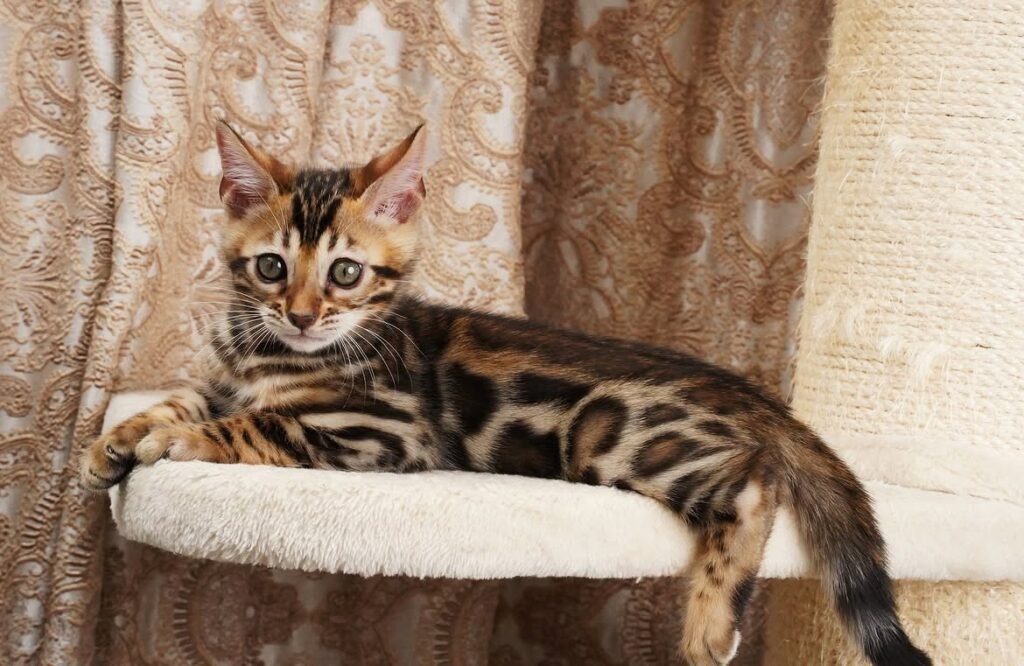
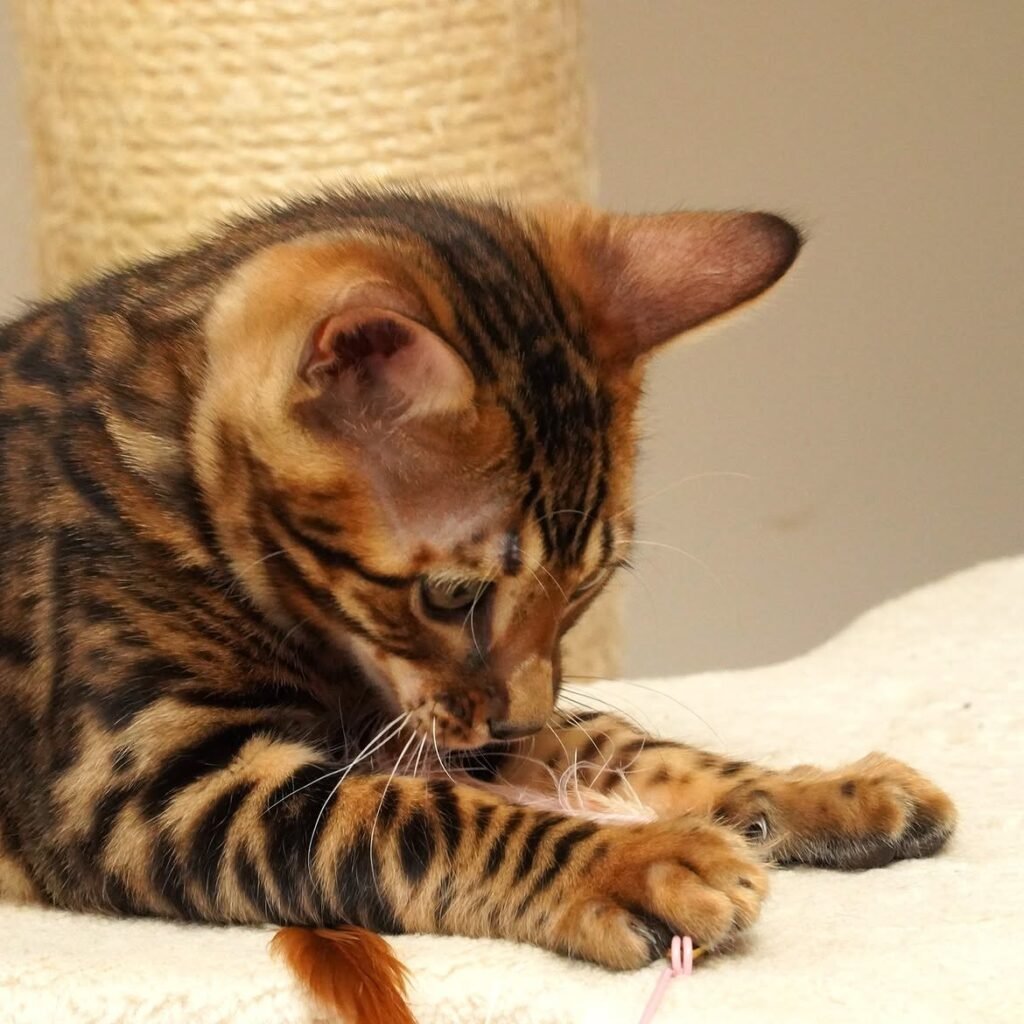
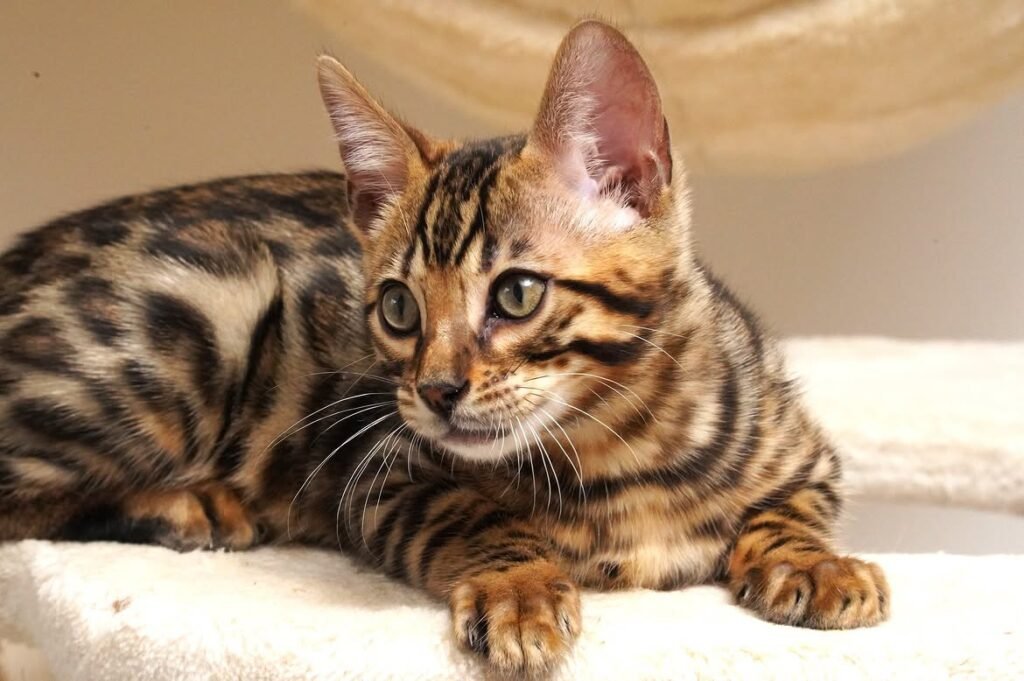
The photographs on this page come from our existing kitten gallery. They show play and resting settings, but are not a dated record of a particular litter’s complete development.
Hygiene and Biosecurity
Early social experiences need to be considered alongside infectious-disease risks. The AVA’s guidance recommends appropriate hygiene and avoiding exposure to sick animals or animals of unknown health status.
We provide photos, videos and progress updates, with live video calls available by arrangement. Pre-collection home visits and meet-and-greets are not offered. Please ask us about the current litter’s care and hygiene arrangements, including cleaning and any measures relevant to their health.
Weaning and Feeding
Our kittens receive commercial wet kitten food and dry kitten kibble, and our feeding routine also includes meat. At handover, we provide your kitten’s current diet, feeding instructions and guidance on gradual food transitions, together with familiar food in the starter pack.
A complete, balanced kitten food appropriate for growth should form the basis of a kitten’s diet. Meat alone is not a complete diet, and raw feeding is not a Bengal requirement. Discuss any raw-food component and diet changes with your veterinarian; the RSPCA’s kitten-feeding guidance recommends avoiding raw meat before 20 weeks. This distinction separates our recorded routine from general nutritional advice.
Ask for the individual kitten’s current foods and feeding routine before collection. There is no single weaning date or meal schedule promised on this page.
Getting to Know Each Kitten’s Personality
A coat preference may start the conversation. The kitten’s temperament and the home they will join help shape the match.
We speak with prospective buyers about their home and expectations, then work with approved families to consider preferences, each kitten’s temperament and suitability. Before reservation, we provide information about the kitten’s personality and activity alongside identity, parent and care details.
Tell us about your daily routine, children, resident animals and experience with cats. Include the space and time you can provide for play, interaction, scratching and climbing. Bengals vary as individuals, and an appealing photograph cannot answer those questions for you.
Preparation, not a personality promise
A lively kitten may behave more quietly while settling into a new home. A kitten comfortable with familiar people may need time with strangers. We describe the kitten we know and help you plan the transition, without promising a permanently fearless, lap-loving or dog-friendly adult.
Our kitten placements require indoor living, with any outdoor access limited to secure enclosures or enclosed gardens. Unrestricted roaming is not part of the arrangement.
Is a Bengal right for your home? Read our breed information before deciding.
What Our Kittens Have Practised Before Going Home
These are introductions to build on. They are not guarantees of finished training or instant confidence in a new setting.
Everyday care
- Litter-tray use, with habits still developing.
- Scratching posts or surfaces.
- Gentle brushing and nail trimming.
- Paw, ear and body handling.
Life with people
- Being picked up and held.
- Human contact and household routines.
- Life around children, adults and resident cats.
- Play, enrichment and carrier introductions.
A new layout, different litter, unfamiliar people and resident pets can all change how a kitten behaves. Our settling-in guidance helps you build on the routines your kitten already knows.
Homecoming: What You Receive and How We Support You
Collection is by appointment. We prepare you with practical information and familiar items, then stay available for questions as your kitten settles.
Your handover information and starter pack
You receive the applicable health and identity records, official pedigree and registration documents, and your written purchase agreement. The starter pack includes familiar food, toys and a blanket carrying the kitten’s familiar scent.
We explain your kitten’s feeding routine, vaccination history and parasite treatments, and arrange microchip registration transfer. For continuing care, we advise following your veterinarian’s recommendations.
The first days in your home
Our settling-in guidance covers a quiet safe room, gradual access to the home, introductions to resident pets and children, and familiar food, toys and bedding. We regularly follow up during the initial settling-in period and offer ongoing owner advice without a specified end date.
Support and written health terms
Our kitten purchase agreement includes a lifetime health guarantee addressing congenital or hereditary conditions. The remedy is a contribution towards veterinary expenses assessed case by case, not automatic full reimbursement. Claims require a written veterinary diagnosis or report and relevant test results. Read the agreement for its exact terms.
If you cannot keep your Bengal, contact Wild Grace Bengals first so we can help find a suitable rehoming solution. This support does not include a guaranteed take-back, and ongoing advice is not a promise of 24-hour availability.
Collection and interstate arrangements
Collection is personally arranged by appointment. Interstate delivery is generally available by prior arrangement, with transport charged separately. A kitten must receive veterinary clearance before leaving; a medical delay postpones collection or delivery.
Tell us your location and preferred timing so we can discuss suitable arrangements. An enquiry does not confirm availability or reserve a kitten.
Questions About How We Raise Our Kittens
At what age do your Bengal kittens go home?
Usually at around 12 weeks, after a veterinary examination and clearance. This is our usual timing, not a guaranteed handover date. If clearance is delayed, we arrange the necessary care and postpone collection or delivery.
How do you socialise your kittens?
Our kittens grow up in the family home with human contact, gentle handling, normal household routines, play and enrichment. They are introduced to practical care such as brushing, nail trimming, body handling, litter trays, scratching surfaces and carriers. Families continue that learning after homecoming.
Are your kittens raised around children and other pets?
They grow up around children, other adults and resident cats. Dog exposure has not been confirmed. Tell us about your household so we can discuss your kitten’s experience and suitable introductions in your home.
What health screening do the parents receive?
The confirmed programme includes PRA-b and PKDef DNA testing and HCM heart screening. Decisions follow individual results, veterinary advice and overall health. Buyers receive a parent-testing summary. We do not claim that every breeding cat tests clear or that screening guarantees lifelong health.
What veterinary care do kittens receive before handover?
A veterinary health examination, first and second vaccinations, worming, flea treatment and microchipping. Pet kittens are desexed. Relevant records are supplied, and your own veterinarian should advise on boosters and continuing prevention.
Can we see where the kittens are raised?
We provide photos, videos and regular progress updates, with live video calls available by arrangement. Pre-collection home visits and meet-and-greets are not offered. Collection is arranged by appointment.
What support is available after homecoming?
We provide settling-in guidance, regularly follow up during the initial transition and offer ongoing owner advice without a specified end date. This is not a 24/7 service. Veterinary concerns need veterinary advice, and the purchase agreement sets out the written health provisions.
Let’s Talk About Your Bengal Kitten
Tell us about your home, preferred timing and the questions that matter to you. At Wild Grace Bengals, we discuss each kitten’s background, preparation and suitability with you before you decide.
Further Reading
The links below support the general behaviour, health and nutrition explanations. Wild Grace’s own practices are described separately; the organisations listed have not endorsed our breeding programme.
How We Socialise and Prepare Our Bengal Kittens for Family Life
We introduce practical experiences that a kitten will meet again as a companion: human contact, ordinary household life, routine handling and a carrier.
People and Respectful Handling
Kittens are introduced to being picked up and held, gentle brushing, nail trimming and paw, ear and body handling. These introductions help families understand what has already been started, without promising that every kitten will welcome every kind of handling immediately.
A useful principle for continuing at home is to let a kitten approach or retreat and keep interactions calm. International Cat Care’s kitten guide explains how positive associations support settling and social development.
Household Sounds, Surfaces and Everyday Experiences
Being raised in our family home gives kittens experience of normal household routines. We can explain what your kitten has encountered, without claiming a formal sound, surface or appliance checklist. Tell us about your home so we can discuss what will be familiar and what will be new.
Carriers, Travel and Veterinary Handling
We introduce carriers as well as gentle body handling. Short car journeys are not a regular part of our kitten routine. Carrier familiarity is useful preparation, but it does not guarantee that the journey home or a future vet visit will be free of stress.
Before collection or arranged delivery, talk with us about the journey and your kitten’s individual needs. Your veterinarian can advise on travel concerns and future handling.
Children, Cats and Dogs
Our kittens grow up around children, other adults and resident cats. Dog exposure has not been confirmed, so we do not describe them as dog-socialised.
Tell us about children and animals in your household. A familiar species is not the same as a familiar individual, and introductions in the new home need time and supervision.
Play, Climbing, Problem-Solving and Rest
Play and enrichment are part of our home-raising approach, and kittens have scratching posts or surfaces to practise on. The gallery shows some of our kittens using cat trees and toys. We do not claim a prescribed puzzle programme or a fixed amount of daily activity.
For the new home, plan for safe climbing, scratching, suitable toys and quiet places to withdraw. Bengal curiosity does not mean constant stimulation: opportunities to rest belong alongside play. AAHA/AAFP guidance describes the importance of kitten play and a suitable environment.