
Bengal Cat Breed Guide
Bengals are active, curious cats with striking coats and a strong interest in the world around them. Living well with one means looking beyond appearance to their individual temperament and everyday needs.
Explore Bengal colours, behaviour and care, then consider whether your household can offer the time, space and interaction a kitten needs.
Practical information for prospective owners in Melbourne and across Australia
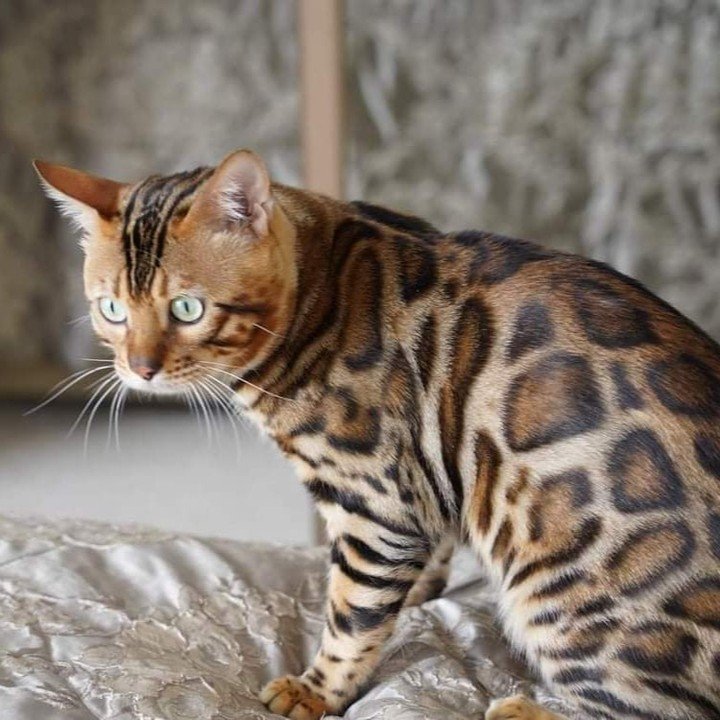
Living with a Bengal
Personality matters more than a label
The breed developed from domestic cats and the Asian leopard cat. Today’s companion Bengals are domestic cats, but their distinctive appearance can create unrealistic expectations about both their behaviour and their care.
Many Bengals enjoy climbing, exploration and interactive play. Some are vocal and keen to follow household activity; others are more reserved. Affection may mean sitting nearby or joining a game rather than being held. Fetch, water play and harness walks are individual preferences, not promises that come with the breed.
Ask about the particular kitten: how they approach people, respond to handling, recover from surprises and interact with their littermates. Early experiences matter, but confidence and habits continue to develop after a kitten moves home.
Breed background: TICA’s Bengal profile.
Bengal colours and coat patterns
Colour describes the coat’s background and pigment; pattern describes how its markings are arranged. A snow Bengal can have a spotted or marbled pattern, just as a brown Bengal can.
Spots and rosettes
Spotted coats may have solid spots or rosettes: markings with a darker outline and a lighter centre. Rosette size, shape and spacing vary.
Marbling
Marbled coats have flowing, interconnected markings rather than separate spots. Marbling is a pattern, not a separate breed or a colour.
Brown
A brown tabby coat can range from cooler tones to warm gold or brown, with darker markings.
Silver
A pale silver background contrasts with dark markings. Lighting can make a cool-toned brown coat look silver in a photograph.
Seal Lynx Point
One of the snow varieties, with a pale body, contrasting markings and blue eyes. Its colourpoint pattern is associated with two copies of the Siamese colour-restriction variant.
Seal Mink
A snow variety combining the Siamese and Burmese colour-restriction variants. Mink Bengals commonly have aqua eyes and a cream-to-tan background.
Seal Sepia
A snow variety associated with two copies of the Burmese colour-restriction variant, generally with a warmer, more shaded background than lynx point.
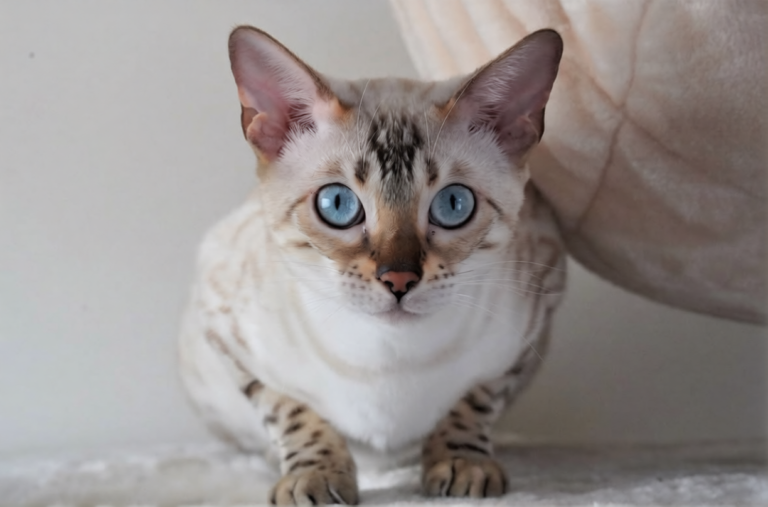
Holly from our gallery. A photograph shows appearance; it does not confirm a cat’s colour genotype.
Age, lighting and individual variation can make snow varieties difficult to distinguish. Pedigree information and, where needed, colour DNA testing help clarify a label. Coat colour is not a reliable guide to personality.
Our breeding programme includes brown, silver, snow and marble-patterned Bengals. This describes the programme, not a promise that every type is currently available. Meet our kings and queens.
Colour references: UC Davis colourpoint genetics and the CFA Bengal breed standard.
Make room for everyday cat behaviour
An indoor home needs more than a bowl and a bed. Offer stable climbing places, scratching surfaces, hiding spots and comfortable resting areas. Spread useful resources through the home so a cat can choose where to eat, rest and retreat.
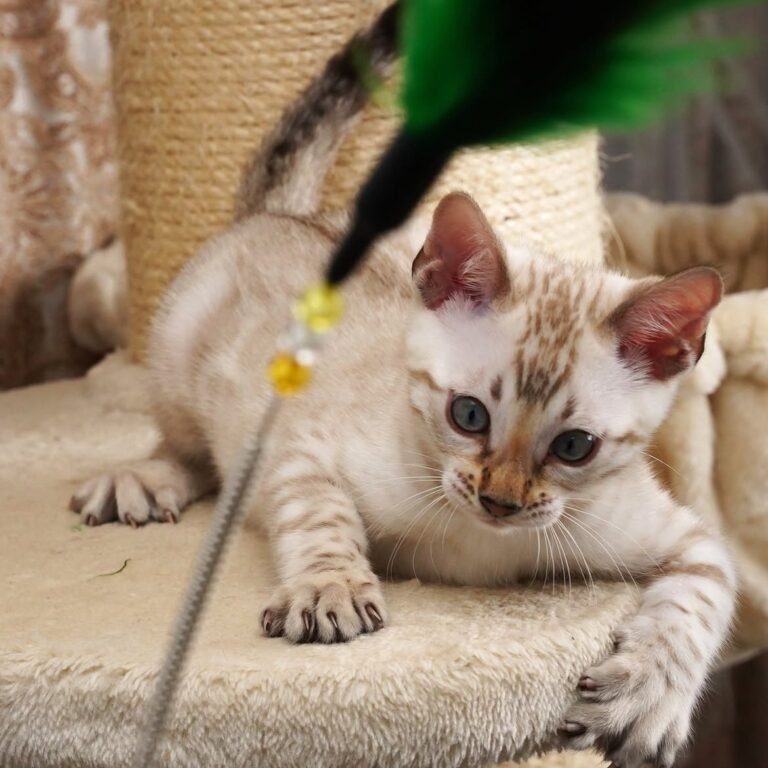
Build interactive play into your routine and offer safe food puzzles or other supervised activities. Rotate toys to maintain interest. Watch your cat’s response: enrichment should offer choices, not force participation.
A cat wheel can be an optional activity, but it does not replace your attention or a varied environment. Secure shelves, furniture and windows before a curious kitten begins exploring.
Our kittens must live indoors, with any outdoor access limited to a secure enclosure or enclosed garden. This is Wild Grace Bengals’ placement requirement. RSPCA Victoria also recommends containment for cats’ safety and to reduce their impact on wildlife.
Feeding and water
Choose a complete and balanced food appropriate for the cat’s life stage and health. Growing kittens need kitten food; discuss portions and body condition with your veterinarian. Make food changes gradually and provide fresh water.
“Grain-free” alone does not tell you whether a food meets a kitten’s needs. We provide your kitten’s current feeding information to help you plan a gradual transition. Your veterinarian can advise on individual dietary concerns.
Grooming and routine care
Gentle brushing is an opportunity to check the coat and skin and help a kitten become comfortable with handling. Introduce paw, nail and mouth care gradually, using your veterinarian’s advice.
Keep litter trays clean and easy to reach. Arrange routine veterinary checks and follow your vet’s recommendations for vaccinations, parasite prevention and dental care.
Health questions worth asking
A health-testing label needs context. Ask what was assessed, which parent the result relates to and how it informed the breeding decision.
HCM heart screening
Hypertrophic cardiomyopathy involves thickening of the heart muscle. Echocardiography is used to diagnose it. Heart screening and DNA tests for other inherited conditions answer different questions; one does not replace the other.
PRA-b
Bengal progressive retinal atrophy is an inherited retinal disease that can cause blindness. A DNA test identifies the relevant variant and helps inform breeding decisions.
PK deficiency
Pyruvate kinase deficiency is an inherited condition affecting red blood cells and causing anaemia. DNA results must be interpreted for the individual cat and proposed pairing.
Our approach at Wild Grace Bengals
Our adult breeding cats undergo HCM heart screening and DNA testing, including PRA-b and PK deficiency. HCM screening follows veterinary recommendations; we do not claim a fixed annual schedule. Breeding decisions consider individual results, overall health and veterinary advice.
Kitten buyers receive a summary of the parents’ health testing. We do not describe every cat as having the same result or promise that screening prevents every future illness. Read how our kittens are raised and prepared.
Is a Bengal right for your household?
Use these questions to consider your household and guide your conversation with us. There is no single household type that suits every Bengal.
Consider your everyday routine
- Can you make time for interaction, play and care each day?
- Can your home offer climbing, scratching, hiding and resting choices?
- How will you provide care during workdays, holidays or changes in routine?
- Can you budget for food, veterinary care and unexpected costs?
Consider the individual match
- What are the ages and needs of children or resident animals?
- Can you arrange gradual introductions and separate spaces?
- Are you comfortable with a cat whose activity and affection may differ from your expectations?
- Can you provide indoor living with secure outdoor access only?
A second pet is not an automatic solution to loneliness, and compatibility should not be assumed. Before choosing a kitten, tell us about your existing animals, household activity and time away. Children also need guidance to interact gently and allow a cat to retreat.
At Wild Grace Bengals, our kittens grow up around children, adults and resident cats. We discuss homes with dogs individually because exposure to dogs has not been confirmed. Learn about Wild Grace Bengals and our approach.
Common Bengal questions
Are Bengals suitable for first-time cat owners?
They can be, if the owner understands the individual kitten’s needs and can provide appropriate care, enrichment and secure living arrangements. Tell us about your routine and experience so we can discuss the individual kitten with you.
Are Bengal cats hypoallergenic?
No cat breed can be relied on to be allergy-free. Allergens are associated with saliva and skin as well as material carried on fur; a short coat does not remove the risk. If allergies affect your household, seek medical advice before committing. Read Cats Protection’s allergy guidance.
Do all Bengals like water or playing fetch?
No. These behaviours occur in some Bengals, but individual preferences vary. Offer activities gently and let your cat decide whether to take part.
Can a Bengal live in an apartment?
Consider the usable space and daily routine rather than the address alone. Plan safe climbing areas, resting places, play and secure windows or balconies. We can discuss your setup and the individual kitten’s needs before you decide.
Is a snow Bengal a different breed?
No. Snow describes a group of Bengal colour varieties, including seal lynx point, seal mink and seal sepia. These are colour distinctions, not separate breeds.
Can Bengals live with children or other pets?
Suitability depends on the individual animals, their past experiences and careful introductions. Provide separate resources and retreat spaces, supervise children and avoid assuming every Bengal will welcome every animal.
Talk to us about life with a Bengal
Contact Wild Grace Bengals to discuss your home, expectations and timing. We can help you consider an individual kitten’s needs and the practical next steps.
Planning your budget? Explore kitten prices and inclusions.